A complex study enrollment, made simple for every family.
SPARK, an online autism research study from the Simons Foundation, needed families of every shape to be able to join on their own. We turned a complicated, highly regulated enrollment into a few clear steps.
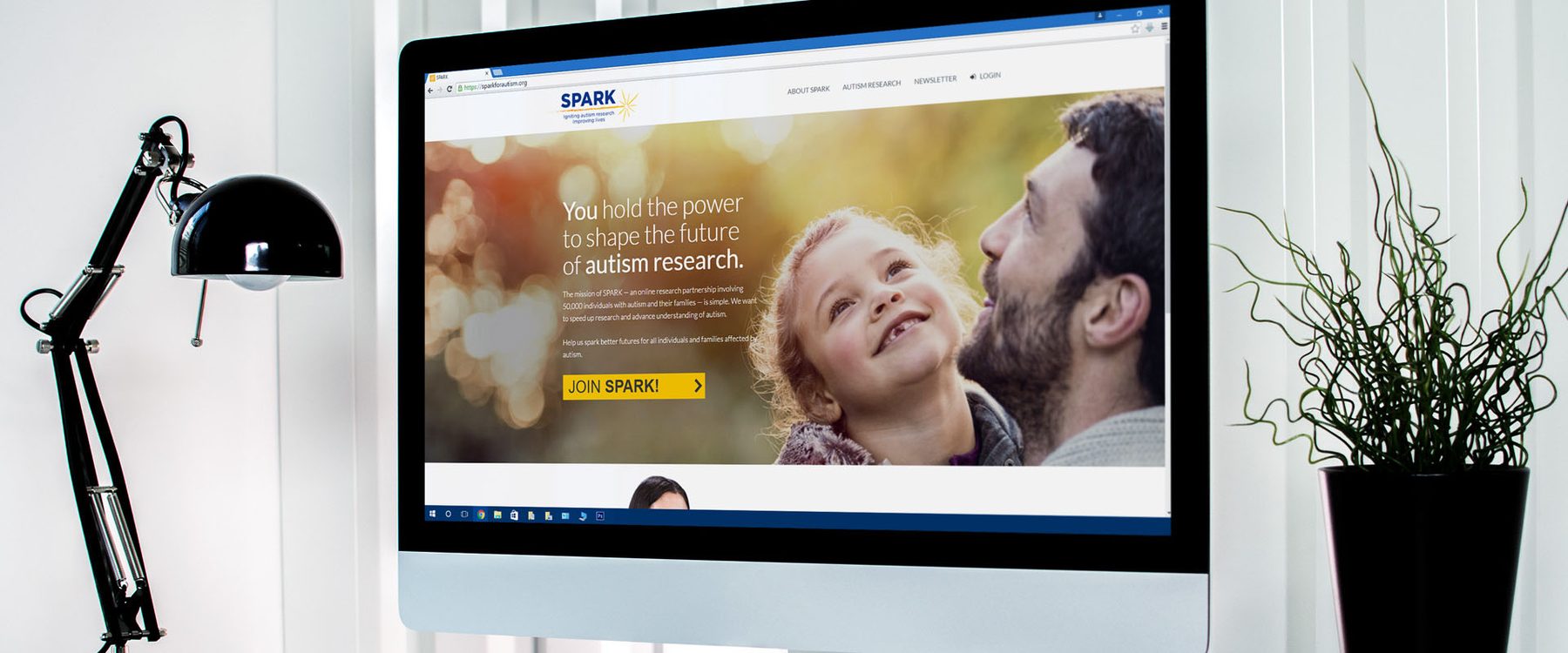
- People enrolled in the first phase
- 37,000+
- States represented
- 50
- Participants in SPARK today
- 400,000+
Research that depends on families signing up.
SPARK is an online research partnership created by the Simons Foundation to speed up research and advance understanding of autism. Its success depends on thousands of people with autism and their families choosing to join, and staying involved.
Every family is different, and the science needs every detail.
Sometimes the person with autism is a child, sometimes it’s a parent. Sometimes it’s one person in the family, and sometimes the family tree is far more complex. Registration had to work for every one of those combinations, and collect exactly the information the scientists needed for each.
The challenge was to make a process that is genuinely complex behind the scenes feel simple to the person filling it in.
Map every family before designing a single screen.
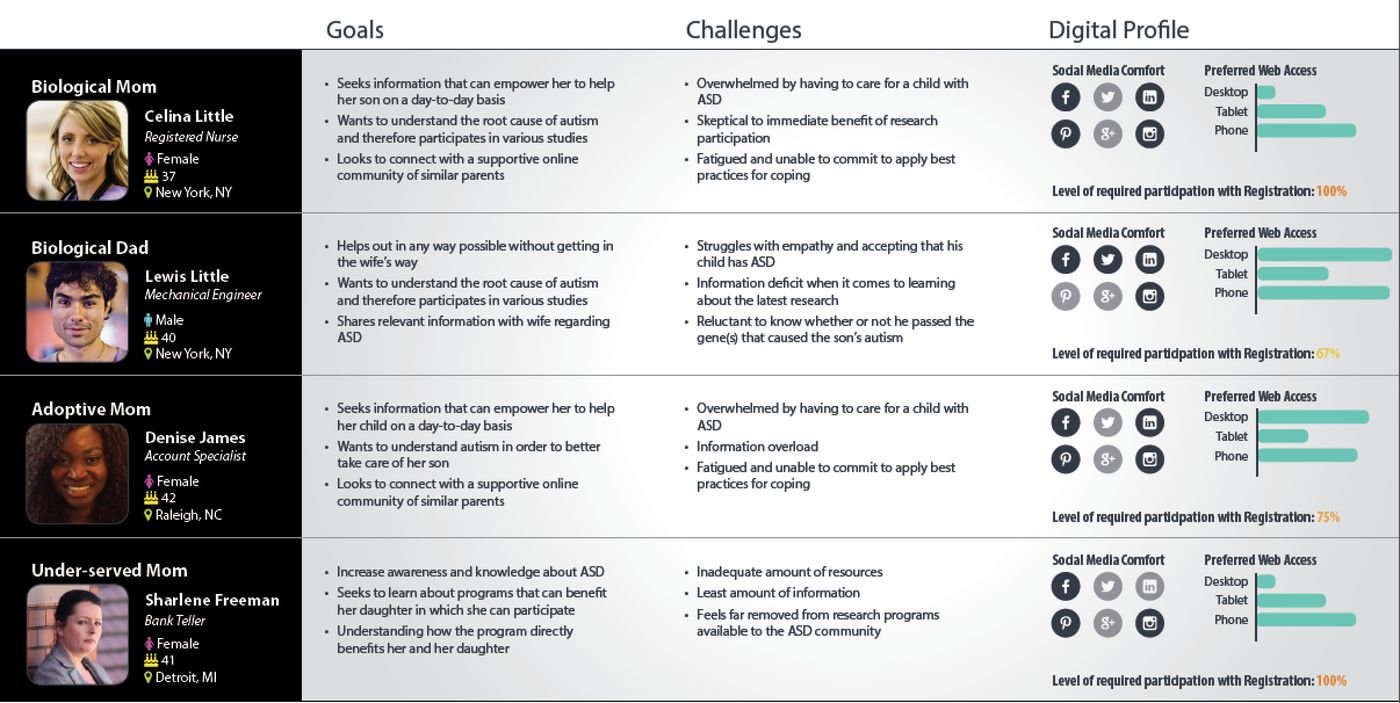
We built personas for the people most likely to join: a biological mom and dad, an adoptive mom, an under-served mom with the least access to information, other family members, an adult with autism, and a child with autism. We grouped them by how engaged they already were with research, and noted how much of the registration each would need to complete.
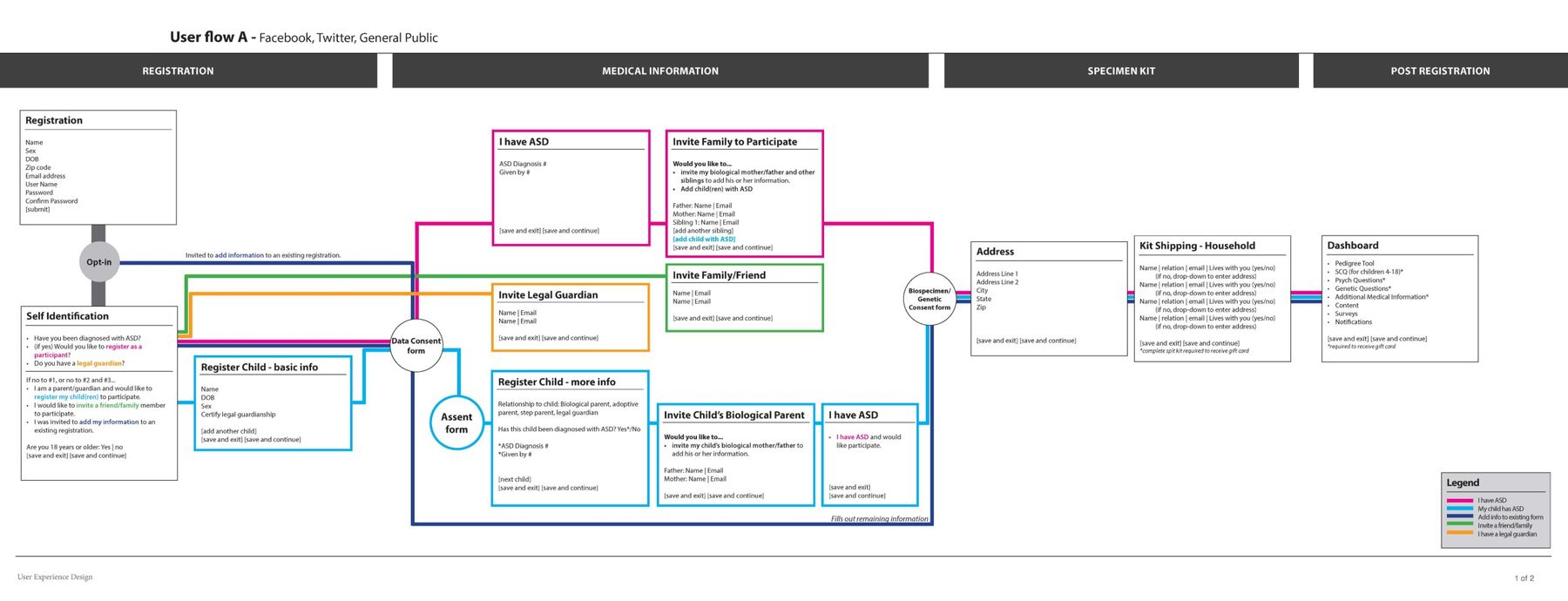
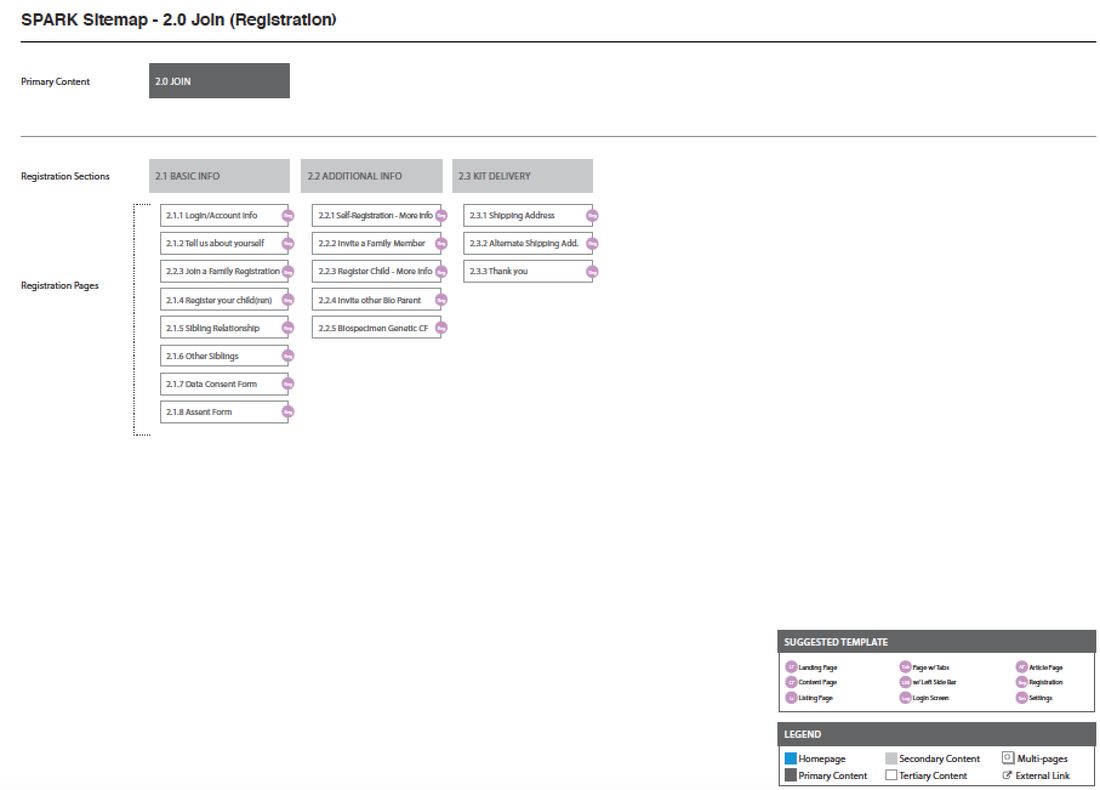
Then we mapped every path through the process: “I have ASD,” “my child has ASD,” adding information to a family member’s registration, inviting family, and registering with a legal guardian. That map became the decision logic behind registration.
Consent rules had to be built in, not bolted on.
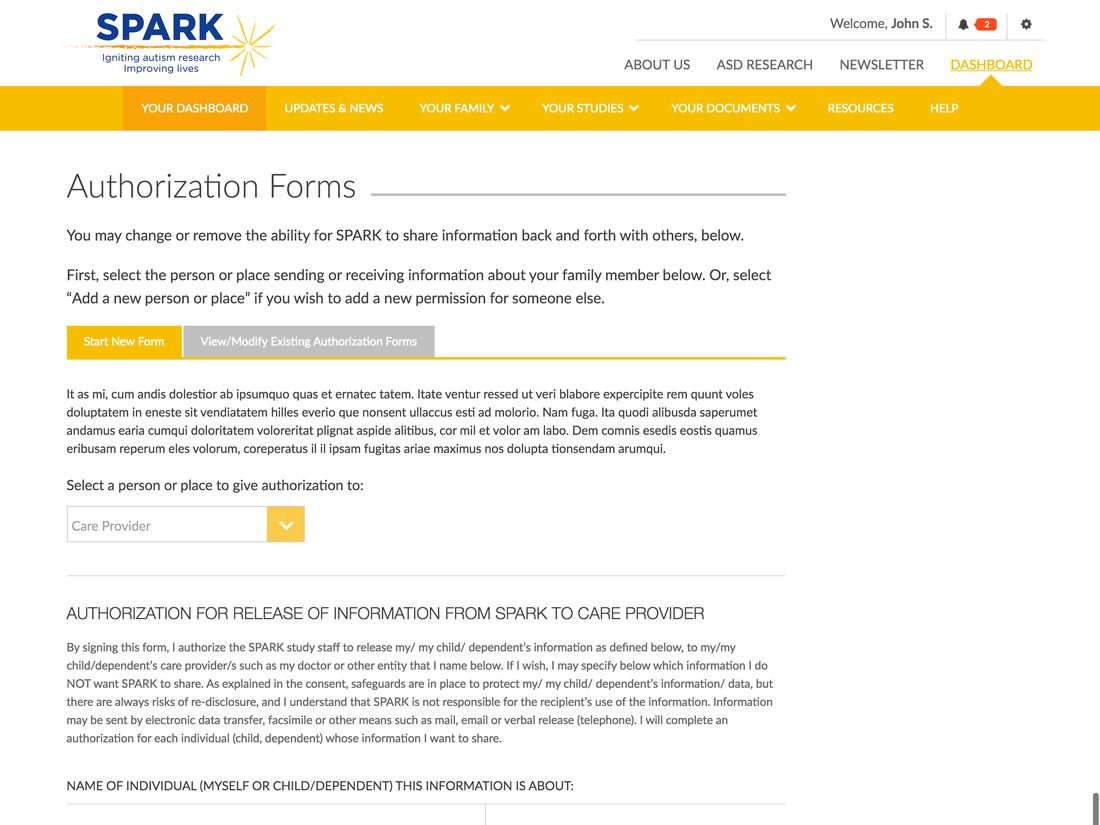
Because of the nature of the study, there were strict rules about assent, consent, and what information could be shared. Rather than treating them as legal screens at the end, we designed them into the flow, so registration stayed compliant while still feeling simple and logical for everyone.
A clear path in, and a reason to stay.
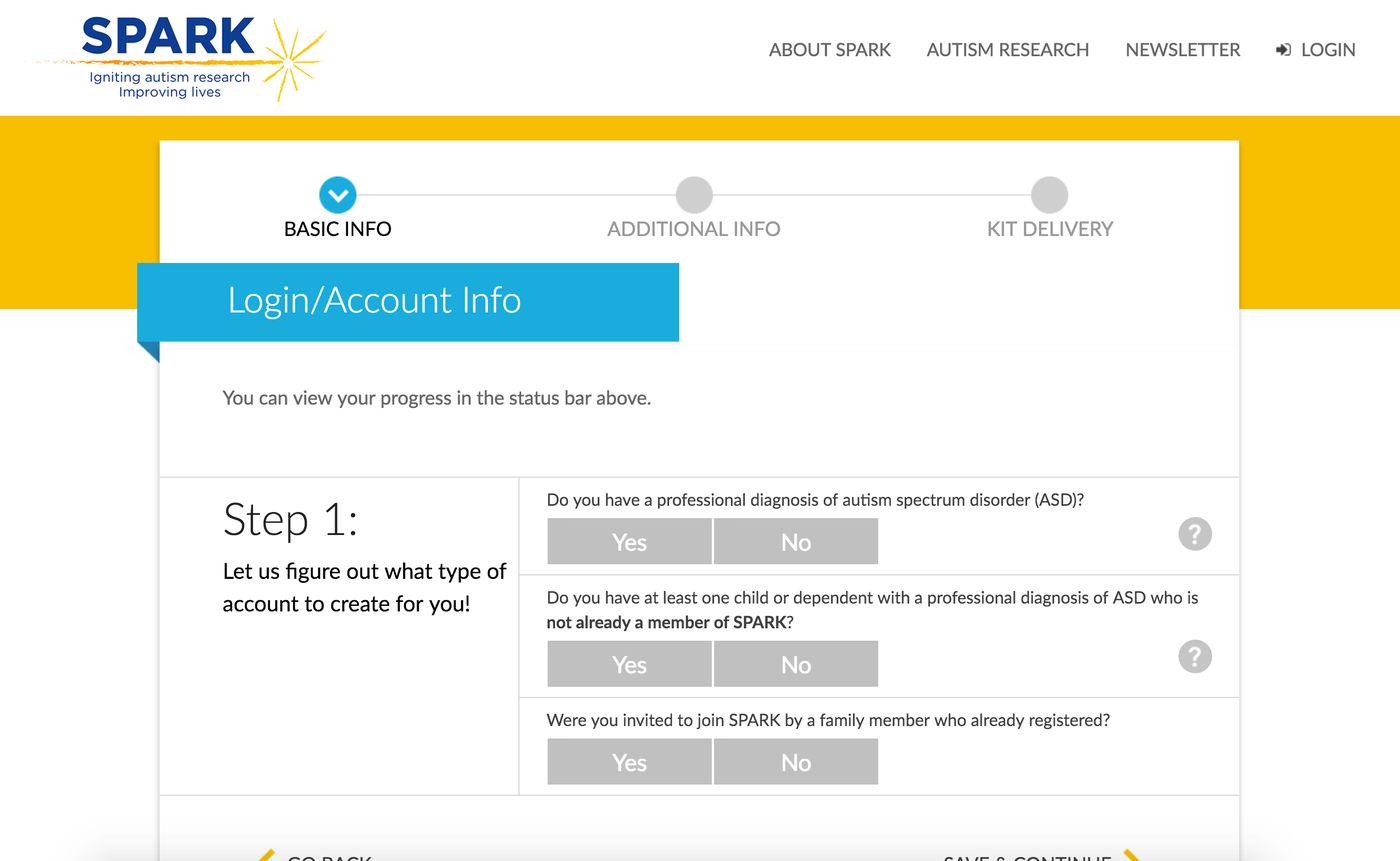
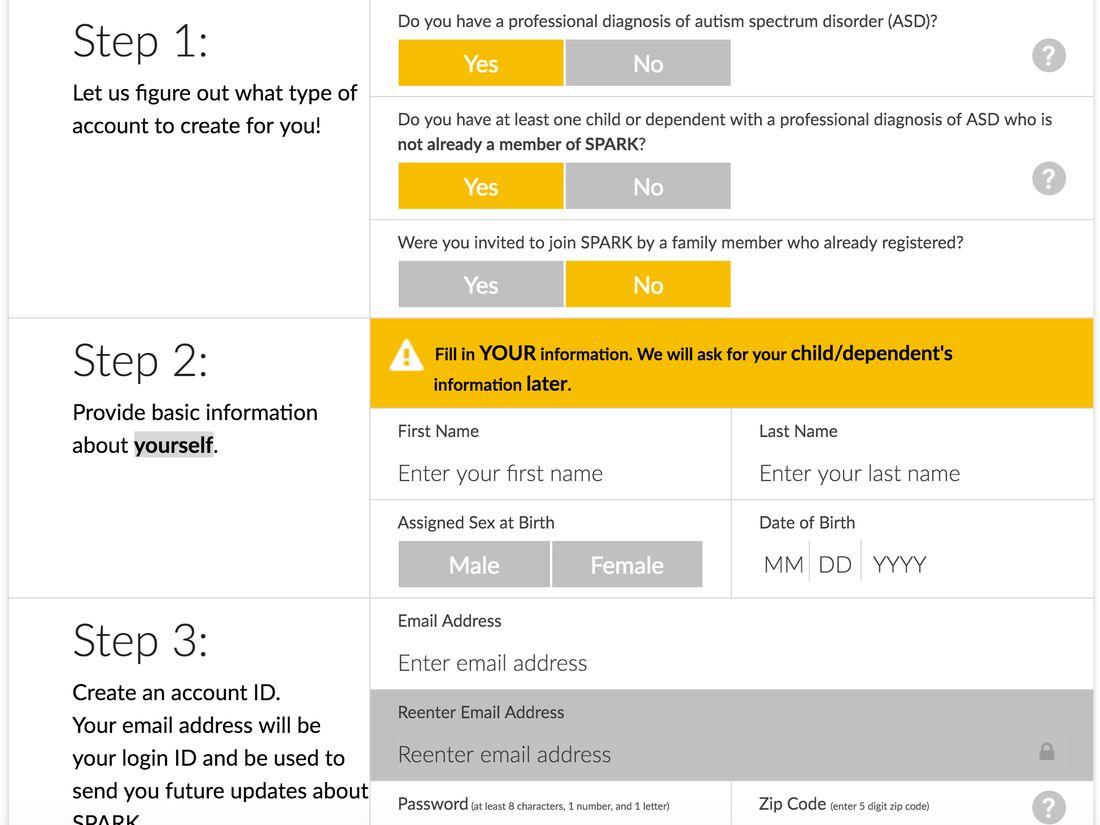
Three questions to start
“Let us figure out what type of account to create for you”: three yes-or-no questions route each person to the right path.
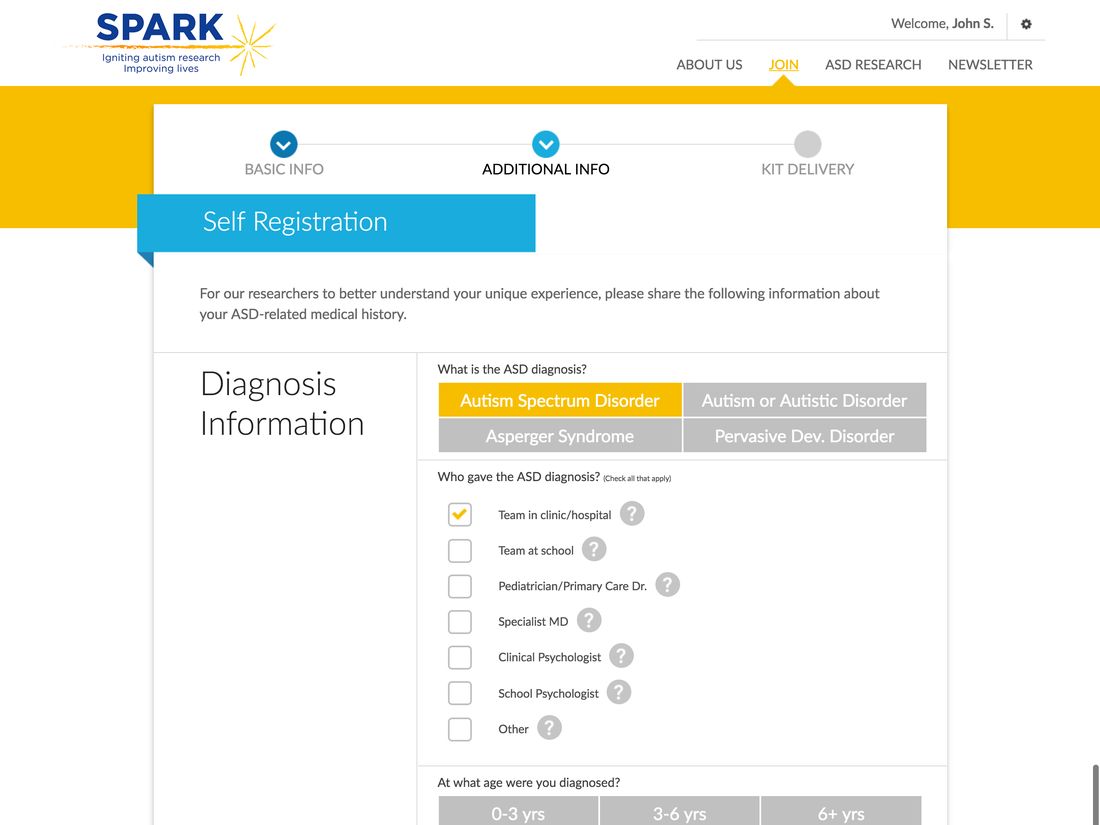
Three clear stages
Basic info, additional info, and kit delivery, with a progress bar so families always know where they are.
Plain-language guidance
Notes at the right moment, like “Fill in YOUR information. We will ask for your child’s information later.”
Consent and assent, designed in
Every regulatory requirement met without making the experience harder to follow.
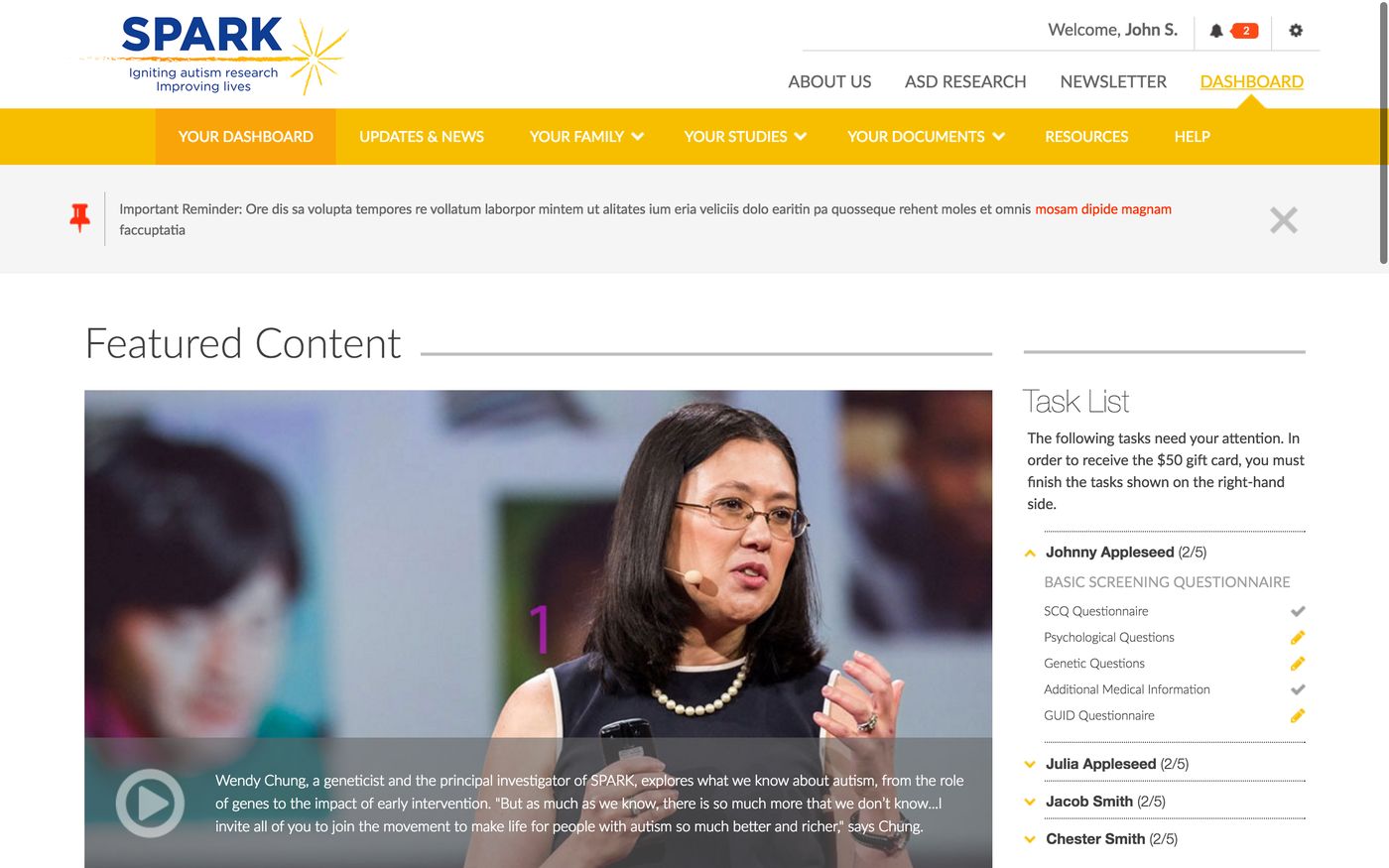
A participant dashboard
A task list for each family member, tools to add family and manage guardianship, control over data sharing, and news and resources to keep people engaged.
From family map to finished flow.
From registration to a research community.
The registration made it simple for families to take part while capturing everything the scientists needed. After its national launch in April 2016, SPARK enrolled over 37,000 people from all 50 states in its first phase, and the dashboard gave participants and the Simons Foundation a place to keep communicating.
SPARK has since grown into the largest autism study to date, with more than 400,000 autistic individuals and family members participating.
Who built it
- UX design lead
- José Valenzuela
- Sitemap
- with Shaun Scott
- Studio
- RFI Studios, a Ruder Finn company
More case studies